글쎄요, 저도 잘 모르지만 한번 살펴볼까 합니다.
핵심은 이리라는 용어에 달려 있는듯 합니다. 용어에 상관없이 이 주제에 논의될 수 있는 동물은 두종류인듯 합니다. 즉 GRAY WOLF(RED WOLF제외)와 DHOLE이라는 두종이지요. 우리가 각기 늑대와 승냥이라고 부르는 종입니다.
이 두 동물은 많은 차이를 보이는 동물입니다. 늑대와 개등의 개과 동물은 치식이 42식이지만 이 승냥이는 40식으로 어금니가 한쌍 없습니다. 현재 학계에서는 개의 조상은 늑대라는 것에 이견이 없는 것으로 압니다. 심지어 늑대와 코요테의 미토콘드리아 DNA차이점이 4%인데 반해 늑대와 개와의 차이는 불과 0.02%인가?라는 군요.
이 상오 엽사는 이리를 북방의 보다 큰 늑대종을 언급하는데 사용했으며 승냥이는 적랑등으로 간주한 것으로 압니다만, 한상훈박사님은 이리를 승냥이를 지칭하는 용어로 보시는 것 같습니다. 실제로 과거에 얼마만큼의 구별을 갖고 불리었는지 알수는 없지만 남쪽에서도 승냥이가 포획된 사례가 있다는 점으로 볼때, 앞으로를 생각한다면 명확한 구별을 갖어야 한다고 봅니다.
늑대는 지역에 따라 다양한 외모와 크기 차이를 보이고 있습니다. 같은 유럽이라도 차이를 보이지요. 한때 미대륙에서만도 50아종으로 나눈적도 있고 이웃 일본도 2종의 작은 늑대가 있었다고 합니다. 현재는 학자마다 조금씩은 다르지만 30아종 정도로 나누고 있지요. 또 승냥이도 10종 내외로 나누고 있습니다.
결론으로 늑대를 이리라고 불러야 할지? 승냥이를 이리라 불러야 할지?는 일관성 있게 통일이 되어야 하며 그 자료의 수집과 결정은 학자들의 몫이라고 생각합니다. 그러나 지금 두종 다 남한에서 자취를 감추었고 자료도 없는 관계로 참 난감한 일이라고 생각합니다.
에구 도움이 되셨나 모르겠네요...
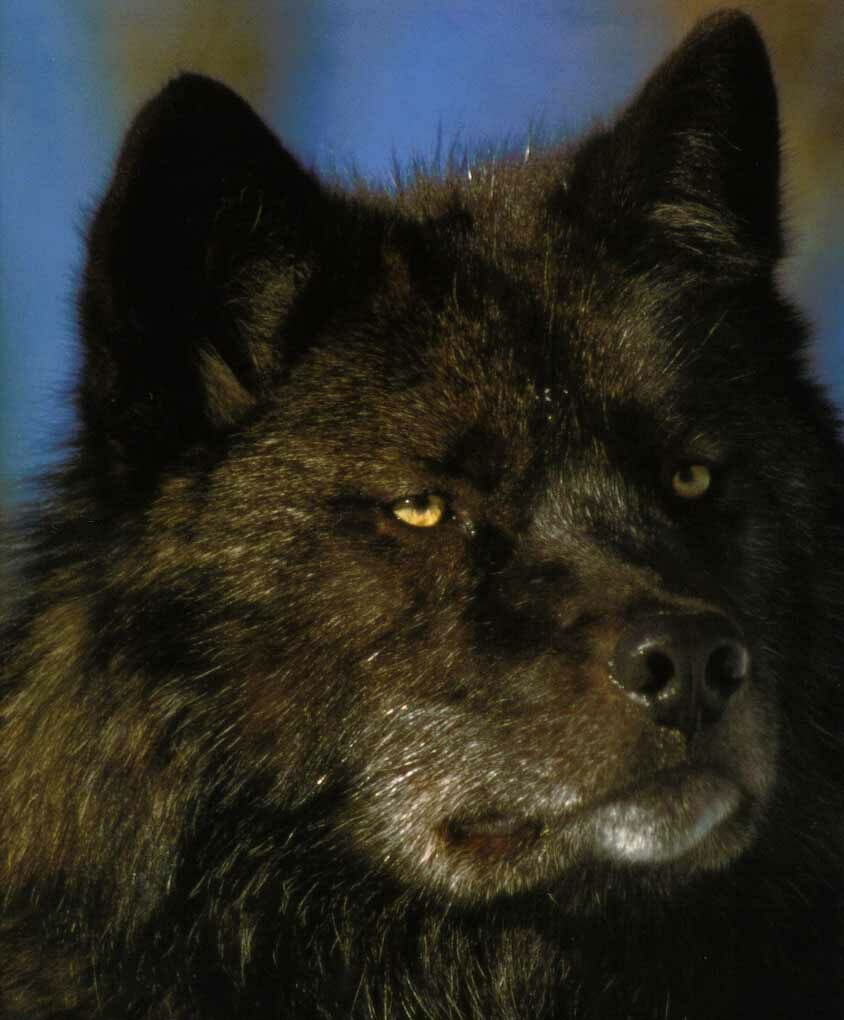
이글은 늑대의 아종 구분.
Subspecies Chart
North American wolves:
Common Name Scientific Name Description
Kenai Peninsula Wolf Canis lupus alces Alaskan wolf that is extinct. It was a very large animal. The determination of species and the size of the animal was done using recovered skulls.
Melville Island Wolf , Arctic wolf Canis lupus arctos This wolf only occurs on the arctic islands from Melville Island to Ellesmere Island. Can weigh up to 175 lb., fur is usually white or off-white. They mature the latest, at 3 years. Breeding season is in April-May. 2-3 cubs are born beige. They eat arctic hares, musk ox, lemmings, voles, and caribou, with rodents comprising a large part of their diet.
Mexican Wolf Canis lupus baileyi This is the smallest North American wolf, weighing from 60-90 lb. It occupies the most southern territory. It lives in the Sierra Madre and the surrounding region of western Mexico. It is generally dark and grizzly colored. They have the largest mane of any wolf. It once roamed the areas of Arizona and New Mexico. Mexican wolves will eat deer, elk, bighorn sheep, pronghorn antelope, rabbits, wild pigs known as javelina, and rodents. In 1960, the last known wild Mexican wolf was shot. The Mexican Wolf Recovery Plan set out in the early 1990's to create a self-sustaining Mexican wolf population in their former range.
Newfoundland Wolf Canis lupus beothucus Extinct. This was almost pure white and of medium size.
Banks Island Tundra Wolf Canis lupus bernardi This wolf lives on Banks Island in the Northwest Territories. It is a large and rangy looking animal. Its color was mostly white with black-tipped hairs along the mid of the back.
British Columbian Wolf Canis lupus columbianus This wolf lives in British Columbia, Canada. It is among the largest of the wolves. This animal can weigh as much as 140 pounds. This wolf's color is generally either gray or black, the blacks being the largest of the two.
Vancouver Island Wolf Canis lupus crassodon This wolf is medium size and is grayish-black in color.
Cascade Mountains Wolf Canis lupus fuscus This wolf was once known as the "brown wolf" because of its cinnamon or buffy color. It is a medium sized animal, weighing about 80 to 90 pounds. It is not known if any of these animals still survive.
Hudson Bay Wolf Canis lupus hudsonicus This is a light-colored wolf of medium size having a winter coat that is nearly white. It is often called a "tundra wolf." It lives in the area west and north of the Hudson Bay. It migrates south with the caribou herd.
Manitoba Wolf Canis lupus griseoalbus This wolf is supposed to roam in central Manitoba and northern Saskatchewan. It has never been validated that this wolf exists. Debate continues as to validity of this animal being a subspecies.
Northern Rocky Mountain Wolf Canis lupus irremotus This is a medium to large light-colored animal. The original range of this animal included the northern Rocky Mountains including southern Alberta, Canada. In the United States it is considered extinct. Recent reports of a few wolves in Glacier National Park, Montana may indeed be wolves of this subspecies.
Labrador Wolf Canis lupus labradorius This wolf varies in color from dark gray to almost white. It is a medium size wolf that occurs throughout northern Quebec and Labrador.
Alexander Archipelago Wolf Canis lupus ligoni This wolf is smaller than most wolves in North America. It has short hair and is dark in color. A black phase is common. A black phase is gray colored fur underneath black fur.
Eastern timber wolf Canis lupus lycaon This wolf had the most extensive range of any other subspecies. Its original range covered the eastern United States, including Florida and west to Minnesota. These animals come in every color imaginable.
Mackenzie Tundra Wolf Canis lupus mackenzii This is a medium sized wolf. Its color ranges from black to white. It lives along the arctic coast in the Northwest Territories eastward from the Mackenzie River and south to Great Bear Lake.
Baffin Island Tundra Wolf Canis lupus manningi This is the smallest of the arctic wolves. It occurs on Baffin Island.
Mogollon Mountain Wolf Canis lupus mogollonensis Extinct. It used to live in central Arizona and New Mexico. The coloration was usually dark with some whites.
Texas Gray Wolf Canis lupus monstrabilis Extinct. This wolf used to live in Texas and northeastern Mexico. Its members were usually small and dark colored. There were some whites.
Great Plains Wolf/ Buffalo Wolf Canis lupus nubilus Extinct. This animal once roamed the area from southern Manitoba and Saskatchewan, Canada, to northern Texas. This was a medium sized animal with great variability in color.
Mackenzie Valley Wolf Canis lupus occidentalis This wolf lived in the upper Mackenzie River Valley southward into Alberta. It represented some largest wolves in North America. The color of these animals varies from black to almost pure white.
Greenland Wolf Canis lupus orion No evidence exists that this is a distinct species. Many scientists believe these animals are part of the subspecies: Canis lupus arctos. Possibly extinct.
Interior
Alaskan Wolf Canis lupus pambasileus Wolves of this species are among the largest in North America. These wolves roam throughout the interior of Alaska, except the tundra region of the arctic coast.
Alaska Tundra Wolf Canis lupus tundrarum This is a large wolf with long light colored fur. It ranges along the tundra region of Alaska's arctic coast.
Southern Rocky Mountain Wolf Canis lupus youngi Extinct. This wolf used to live in the Rocky Mountain region of Nevada, Utah, and Colorado. It was a medium size animal having light-colored fur.
Eurasian Wolves
Common Name Scientific Name Description
Tundra Wolf Canis lupus albus This wolf occurs throughout the Eurasian tundra and forest-tundra from Finland eastward to the Kamchaika Peninsula. It is a large, long-furred, light-colored animal much like its North American counterpart: Canis Lupus Tundarum.
Arabian wolf Canis lupus arabs This is a small wolf with a short thin coat. It occurs in Southern Arabia. They weigh 40 lbs. (18 kg) and stand 26 in. (66 cm) high. Their ears are large. A pure Arabian wolf's eyes are yellow; recent interbreeding with feral dogs has diluted the gene pool of this sub-species. They live in pairs or groups of 3-4.
Steppe Wolf Canis lupus campestris The steppe wolf is a small wolf inhabiting the deserts and steppes of Central Asia. It has a short coarse coat that is dull gray with a tint of ochre.
Japanese wolf Canis lupus hattai This wolf once roamed the area of Hokkaido, Japan. It appears to be extinct.
Hondo Japanese wolf Canis lupus hodophilax Extinct. This wolf occurred in Hondo, Japan.
Tibetan Wolf Canis lupus laniger This is a medium sized wolf with long lightly colored fur. It inhabits mainland China, Manchuria, Mongolia, Tibet, and southwestern Russia.
Common Wolf Canis lupus lupus This is the wolf that once occurred throughout Europe and the entire forest of Russia. It is a medium sized animal with coarse dark fur.
Indian, Iranian, Asiatic wolf Canis lupus pallipes This wolf inhabited Iran and India and the lands in between these two countries. They stand 18-30 in. and weigh 55-70 lbs. Their hair si short, dense, and brownish colored. Their ears are large. Just like the Arabian wolf, the Indian wolf is threatened by interbreeding with domestic dogs, as well as habitat loss and being killed by humans.
Data from Mech, L. David, "The Wolf: The Ecology and Behavior of an Endangered Species
이 작자가 Canis lupus chanco는 빼먹었네요! 나쁜 xx
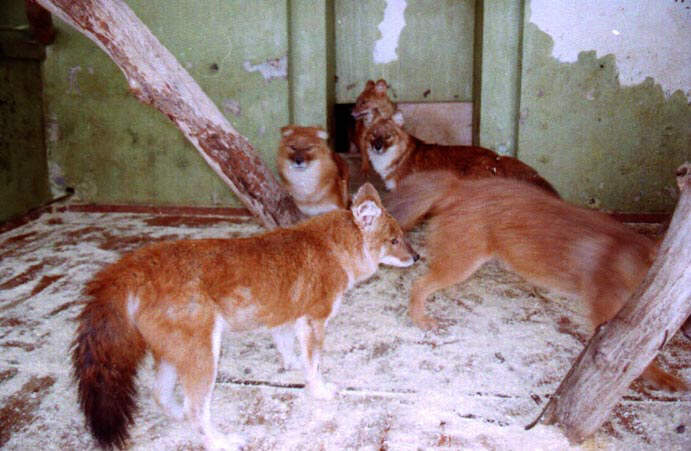
이글은 Dhole의 아종 구분.
Subspecies
C. a. alpinus -- Eastern Russia
C. a. adustus -- Northern Myanmar & Indo-China.
C. a. dukhunensis -- India, south of the Ganges river
C. a. fumosus -- Western Szechuan, China & Mongolia.
C. a. hesperius -- Eastern Russia & China
C. a. infuscus -- Southern Myanmar, Malaysia, Thailand & Vietnam.
C. a. javanocus -- Java
C. a. laniger -- Kashmir & Southern Tibet
C. a. lepturus -- China, south of the Yangzhe river
C. a. primaevus -- Himalayan regions of Nepal, Sikkim and Bhutan.
C. a. sumatrensis -- Sumatra
사진은 북미의 늑대와 러시안 승냥이.
|



















 조회 : 2,061
  추천 : 0

